Preventive maintenance (PM) enhances equipment reliability, reduces the total cost of ownership (TCO), and extends the service life of high-value manufacturing assets. PRAB® equipment—often still running after 30+ years—proves how disciplined maintenance translates into unmatched durability and ROI.
 Why Preventive Maintenance Matters
Unplanned downtime is the largest hidden expense in metalworking and industrial operations. When a conveyor chain breaks or a filter clogs unexpectedly, the loss compounds—idle labor, missed orders, scrap contamination, and sometimes environmental violations.
Preventive maintenance is not just about avoiding breakdowns; it’s about maintaining efficiency, safety, and profitability. According to industry benchmarks, planned maintenance costs are typically 2–4× lower than emergency repairs. *
PRAB’s blog, Improving Your Preventive Maintenance Programs, highlights how proactive inspection schedules and proper lubrication extend component life, prevent contamination, and reduce risk.
For more than 70 years, PRAB has engineered rugged, USA-built systems designed for continuous operation in demanding environments. From metal scrap conveyors to metal chip processing technology, coolant recycling and reuse equipment, and industrial wastewater treatment units, PRAB systems are renowned for their longevity—many running decades beyond their expected lifecycle.
Manufacturers adopting structured PM programs report measurable gains:
| Benefit | Typical Impact |
| Reduced Downtime | Up to 30% less unplanned stoppage |
| Extended Service Life | 25–50% longer component lifespan |
| Lower Total Cost of Ownership | Planned repairs cost 2–4× less |
| Improved Safety & Compliance | Fewer leaks, spills, and violations |
| Higher Throughput & Energy Efficiency | Cleaner systems move materials more efficiently |
Well-maintained PRAB systems also consume less power, experience fewer hydraulic or pneumatic failures, and deliver consistent performance under load.
Below are highlights from PRAB’s structured PM guidelines. Complete schedules and inspection templates are available in PRAB’s operation guides, which accompany all their equipment.
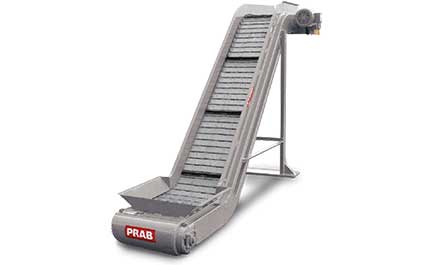 Metal Scrap Conveyors
(Steel Belt, Drag, Oscillating, Pivot Belt)
Daily / Per Shift
Weekly
Monthly
Annually
Tip: PRAB recommends Shell Nerita 2 or an equivalent grease and SAE 20-30 oil for conveyor roller chains. Predictive diagnostics, such as thermography, can identify misalignment or bearing issues before they lead to failure.
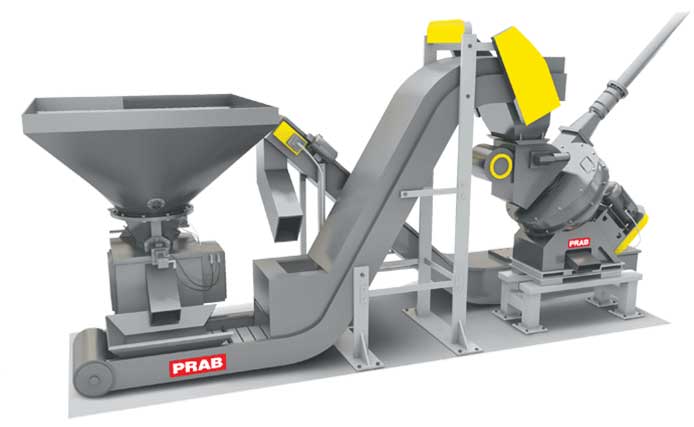 Chip Crushers & Processing Systems
Daily
Every 200 Hours
Quarterly / Annual
See PRAB Metal Chip Processing Systems for integrated crushers, wringers, and briquetters engineered for serviceability and long life.
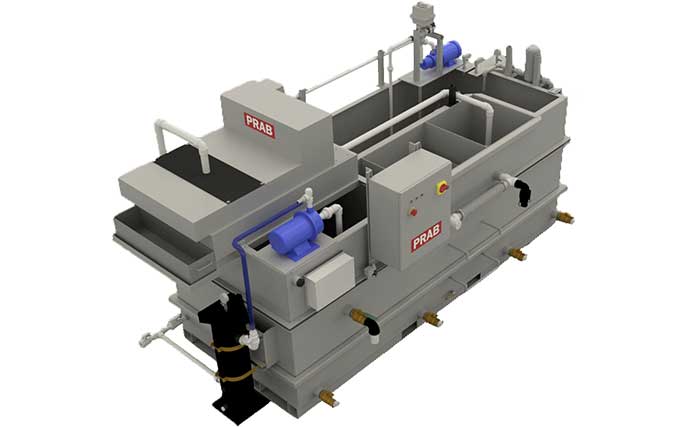 Coolant & Fluid Filtration Systems
Daily
Weekly
Monthly
Annual
Related resource: PRAB Guardian® Coolant Recycling System—an automatic fluid management solution proven to cut new fluid purchases by up to 75%.
 Industrial Process Water and Wastewater Treatment Systems
Daily
Weekly
Monthly / Quarterly
Annual
See PRAB’s Industrial Wastewater Treatment Solutions to learn how PM supports regulatory compliance and Zero Liquid Discharge (ZLD) initiatives.
While traditional PM follows a fixed schedule, predictive maintenance (PdM) uses real-time data—vibration, temperature, amperage, and oil analysis—to predict when service will be needed.
PRAB equipment integrates easily with PdM sensors and Industry 4.0 platforms, giving maintenance teams visibility into:
Combining PM with PdM ensures maintenance is done only when necessary, maximizing uptime and reducing labor costs.
Discuss with PRAB experts the addition of IIoT and extra sensors to your equipment to further automate and streamline your operations.
Preventive maintenance directly improves a system’s TCO by:
PRAB’s Managed Maintenance Program provides OEM inspections, wear benchmarking, and proactive scheduling—ideal for plants with lean maintenance teams.
To achieve long-term success, manufacturing leaders should combine PRAB’s maintenance checklists with operational best practices:
PRAB’s commitment extends beyond equipment design. With over 200 published technical resources, PRAB.com offers case studies, white papers, and checklists to help manufacturers improve operational reliability.
PRAB’s equipment longevity—often surpassing 30 years—shows how engineering quality, combined with disciplined maintenance, yields lasting value. Whether recycling metal chips, treating wastewater, or reclaiming coolant, every PRAB system is designed for serviceability, uptime, and low ownership cost.
Preventive maintenance is the foundation of sustainable manufacturing. It protects both people and profits while reinforcing the environmental and operational goals of modern facilities.
For plant managers and engineers seeking long-term reliability, the best preventive maintenance plan starts with the right equipment—and the right partner.
Explore PRAB’s full library of maintenance resources, guides, and videos at www.prab.com.
Notice:
PRAB recommends that you always follow the maintenance recommendations outlined in the product manuals. Especially if you are processing unique chemicals, metallurgical materials, or other substances, and you need the latest manual, don’t hesitate to contact the PRAB Parts and Service team.


 (800) 968-7722
 (800) 493-3462