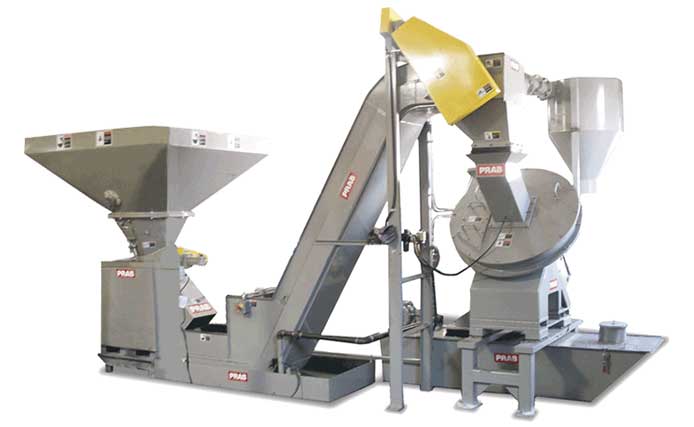




PRAB’s Crusher/Wringer Chip Processing System is engineered to transform metal turnings into dry, flowable chips while recovering valuable cutting fluids. The system combines a crusher to reduce bulky stringy turnings and a wringer to extract fluids efficiently, delivering up to 90% volume reduction and reclaiming up to 99% of coolant and oil.
Built for durability and integration, this system seamlessly fits into your existing manufacturing environment, creating a cleaner, safer workspace while supporting lean production goals. PRAB’s full suite of solutions—including scrap conveyors, process water recycling systems, and industrial wastewater treatment equipment—enhances your profitability by reducing disposal costs, reclaiming reusable fluids, and minimizing unplanned downtime.
A Complete Solution for Profitable Metal Chip Management.
Built to last. Engineered to perform. Proven to deliver results.
PRAB High Volume Aluminum Systems
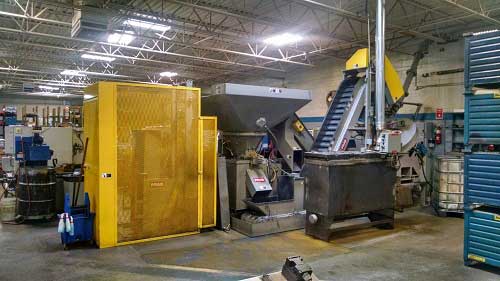
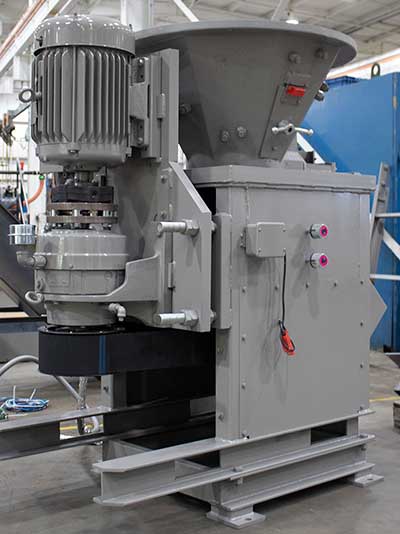
Aluminum turnings are one of the most difficult types of material to process, especially in large volumes. PRAB delivers the reliable, durable, and dependable aluminum processing system your operations demand. The skid steer loader feeds wet, stringy material into the hopper of the 6” pitch steel belt conveyor. The PRAB Steel Belt Conveyor carries the material up and meters it into the crusher. The crusher reduces the stringy chips into smaller, flowable chips and discharges them onto the PRAB Drag Conveyor. The PRAB Drag Conveyor transports the material up and into two diagonal shaft chip wringers. The PRAB Chip Wringers separate the coolant from the chips using nearly 700 Gs of centrifugal force. The settling tank captures the coolant for recycling. An integral PRAB Drag Conveyor discharges the settled fines back into the material flow. The PRAB Chip Wringers internally generate air pressure to pneumatically discharge dry chips. The dry chips travel through the pneumatic piping and cyclones to the PRAB Magnetic Separator. The PRAB Magnetic Separator removes ferrous particles from the stream of material and discharges them into a container, while dry aluminum chips continue onto the weight belt. The weigh belt measures throughput of dry material in process and deposits it into a blower. The blower pneumatically transports the chips across the plant to one or more cyclones, which dissipate the air and deposit the chips into storage bunkers.
Product Brochures
PRAB Chip Processing Systems All Product Brochure
White Paper
White Paper: Green Engineering
Other Downloadable Content
PRAB Builds Equipment for the Toughest Jobs in Manufacturing and Metalworking
Product Brochure: PRAB Diagonal-Shaft Wringer
The recently passed One Big Beautiful Bill Act (OBBBA) is more than political news—it represents a significant shift in the U.S. industrial landscape. With billions of dollars being directed toward infrastructure, advanced manufacturing, clean energy, supply chain modernization, and workforce development, this legislation creates unique opportunities for manufacturers to strengthen operations, increase competitiveness, and invest in long-term growth. For business […]
Green Engineering How to Design More Profit into the Metalworking Operation By Ron Chapman, Systems Sales Manager & Teresa Phillips, Senior Marketing Specialist, PRAB Introduction The green movement is not a new concept. In fact, the basic principles were well-known throughout Europe in the medieval era. However, it was the Industrial Revolution in Europe that […]
Reduce Conveyor Downtime by Following PRAB’s Recommendations In metalworking and machining operations, chip nests (Bushy bundles)—long, stringy turnings that knot together—are among the most common causes of conveyor downtime. These tangled masses can bridge in chutes, wrap around shafts, and ride the return run, leading to stoppages, safety hazards, and costly maintenance. This guide explains how to prevent chip nests […]

 (800) 968-7722
 (800) 493-3462