In many manufacturing environments, metal scrap conveyors are treated as simple transport equipment. In reality, the in conveyor often determines production uptime, labor efficiency, maintenance requirements, scrap flow consistency, coolant containment, and even worker safety.
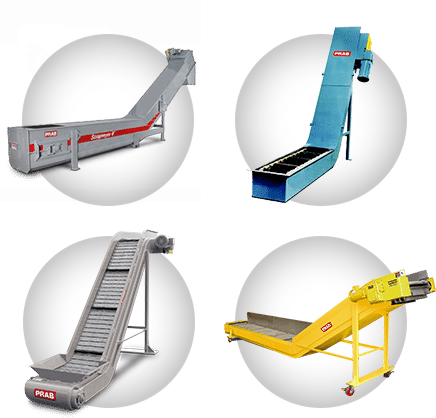 As metalworking operations become more automated and production schedules become more demanding, manufacturers are reevaluating conveyor systems based on long-term reliability, integration capabilities, and total cost of ownership, not just the initial purchase price.
For operations handling metalworking scrap, chips, bushy turnings, stampings, fines, die cast scrap, or hot materials, conveyor design directly impacts plant performance.
For manufacturers evaluating conveyor modernization projects, several engineering and operational differences increasingly separate basic conveyor suppliers from full-system manufacturing partners like PRAB.
Many conveyor suppliers focus on standardized equipment configurations intended to fit a broad range of industries and applications. While this approach can reduce upfront costs, it often creates long-term operational compromises in demanding metalworking environments.
→ Find the Right Conveyor for your needs.
Common issues manufacturers experience include:
In heavy industrial environments, conveyors are not commodity equipment. The application, scrap type, coolant conditions, floor layout, discharge requirements, and production rates all matter.
A conveyor engineered for aluminum fines behaves very differently from one handling hot steel stampings, titanium turnings, or wet cast iron sludge.
This is why application-specific engineering has become increasingly important for modern manufacturing facilities.
One of the biggest differentiators in industrial conveyor performance is the conveyor drive and belt architecture itself.
Positive-drive steel belt conveyors remain one of the most reliable solutions for handling heavy, abrasive, oily, or high-temperature metal scrap because they eliminate slippage and maintain consistent throughput under demanding conditions.
Unlike lighter-duty friction-driven systems, engineered steel belt conveyors are designed to withstand decades of industrial use with predictable maintenance cycles.
At PRAB, conveyor systems are engineered specifically for metalworking scrap applications, including:
Rather than forcing facilities to adapt operations around standard conveyor limitations, PRAB engineers conveyor systems around the application itself.
This is where engineering experience becomes critical.
PRAB has built much of its reputation around integrating new conveyor systems into complex brownfield manufacturing environments. Instead of requiring full facility redesigns, systems are engineered to work within existing operational constraints.
This allows manufacturers to modernize incrementally by:
For many plants, phased modernization reduces operational risk while improving ROI timelines.
Modern metalworking facilities increasingly view scrap not as waste, but as a recoverable asset stream.
This changes the conveyor’s role entirely.
Instead of simply transporting scrap to a dumpster, advanced conveyor systems now serve as the foundation of integrated material recovery systems.
For example, conveyors can feed:
This integrated approach helps manufacturers:
PRAB’s conveyor systems are frequently integrated into broader closed-loop manufacturing systems that connect scrap handling, chip processing, coolant recycling, and wastewater treatment into a unified process.
This systems-level approach is increasingly important for manufacturers focused on operational efficiency and environmental performance.
When manufacturers evaluate conveyor investments solely on upfront purchase price, they often underestimate lifetime operational costs.
Industrial conveyors operate in harsh environments involving:
In these environments, lower-cost conveyor systems may require:
Long-term durability significantly changes total lifecycle economics.
Many PRAB conveyor systems remain operational for decades because they are engineered specifically for demanding industrial applications.
For manufacturers operating around-the-clock production schedules, downtime often costs far more than the original equipment purchase price.
This is why many plant managers increasingly evaluate conveyors based on:
—not just initial capital cost.
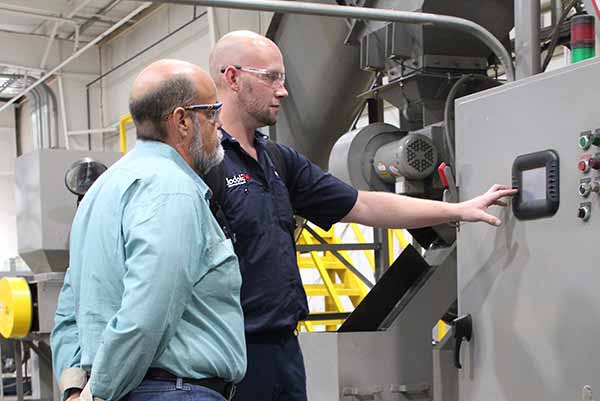 Conveyor projects are rarely just equipment purchases.
They often involve:
The ability to support these requirements can significantly impact project success.
Check out PRAB’s Managed Maintenance Program (MMP)
PRAB differentiates itself through a combination of:
For manufacturers operating mission-critical production lines, access to engineering support and replacement parts becomes essential over the life of the system.
The best conveyor solution is rarely the cheapest standard product.
It is the system that reliably supports production goals over the long term while integrating effectively into plant operations.
Manufacturers evaluating conveyor upgrades should consider:
As manufacturing operations become increasingly automated and resource-focused, conveyor systems are evolving from simple transport equipment into critical infrastructure supporting plant-wide productivity.
Industrial conveyor systems directly influence manufacturing efficiency, maintenance costs, safety, scrap recovery, and operational uptime.
Manufacturers that prioritize application-specific engineering, long-term durability, and integration capabilities often achieve substantially better operational outcomes than facilities that rely on generalized conveyor solutions.
With decades of experience designing conveyor systems for demanding metalworking applications, PRAB continues to focus on engineered systems built for reliability, serviceability, and long-term plant performance.
For manufacturers modernizing scrap-handling operations, the right conveyor partner can influence far more than just material transport.
About the Author
Paul Montgomery is the Marketing Manager at PRAB, Inc., a global manufacturer of engineered metal scrap handling, coolant recycling, and industrial wastewater treatment systems. With more than 30 years of experience across manufacturing, SaaS, custom development, healthcare, and education, he specializes in data-driven marketing that translates plant-floor performance into executive-level financial results. His work centers on total cost of ownership, automation integration, and closed-loop manufacturing strategies that help industrial companies reduce waste, conserve resources, and improve long-term profitability.


 (800) 968-7722
 (800) 493-3462