In today’s manufacturing environment, capital decisions are increasingly evaluated through a financial lens. Plant managers and engineers may focus on throughput, uptime, technical performance, and automation—but for CFOs, the key questions are different:
Across metalworking and industrial operations, automated systems and closed-loop resource management systems are reshaping these answers. When properly implemented, they can transform scrap, fluid, and water handling from unpredictable cost centers into controlled, measurable financial assets.
Many manufacturing investments are still evaluated based on initial price. However, in areas such as metal scrap handling, coolant management, and industrial wastewater treatment, the lowest upfront cost often results in the highest total cost of ownership.
Short-lived or lightly built equipment may require:
Over time, these hidden costs accumulate. An inexpensive system can become expensive to own.
By contrast, durable automated systems are typically designed to:
This is where the financial narrative becomes clear: a high upfront investment with a low total cost of ownership.
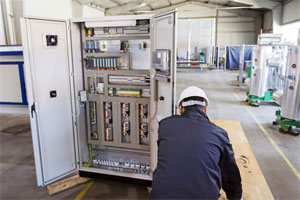
Automation is often positioned as an engineering upgrade. But from a CFO’s perspective, it is fundamentally a cost-control and risk-reduction tool.
Modern automation systems can:
These capabilities produce direct financial benefits:
Automated systems reduce the need for manual handling, excess fluid purchases, and disposal services.
Typical results seen in automated coolant and scrap processing environments include:
When labor savings, reduced material consumption, and disposal cost reductions are combined, many automation and closed-loop systems achieve a payback period of 6 to 18 months.
For CFOs, this creates a capital investment that behaves more like a short-term financial instrument than a long-term liability.
Automation also lowers exposure to:
Each of these represents a financial risk that can impact margins, insurance costs, or regulatory penalties.
Automation and digital monitoring make it easier to translate technical performance into financial outcomes.
For example:
These are the kinds of numbers that resonate in budget meetings and board presentations.
Automation is no longer limited to mechanical improvements. Digital monitoring and control systems now provide real-time operational data that can be tied directly to financial performance.
Modern systems can:
For finance teams, this means:
In many facilities, these systems become part of a broader digital strategy—connecting scrap handling, fluid management, and wastewater treatment into a single, closed-loop infrastructure.
Closed-loop systems combine automation, recycling, and digital monitoring to create a more predictable operating environment.
Instead of:
Closed-loop systems:
The same principle applies to scrap and wastewater streams.
From a financial standpoint, this creates three major advantages:
Recycling and reuse reduce the need for new fluids, water, and consumables.
With less waste leaving the facility, haul-away and treatment expenses drop significantly.
Processed scrap often commands higher resale prices, turning waste into a recoverable asset.
Consider two capital options:
Option A: Low-Cost, Short-Life Equipment
Resources:
CFOs Use ‘Test Before You Buy’ For CapEx Success
High Impact In Industrial Water & Wastewater Treatment
Option B: Durable Automated Systems
When evaluated over 10-, 20-, or 30-year horizons, Option B often delivers significantly lower total cost per ton or per gallon processed.
For CFOs, this transforms the decision from a capital expense into a long-term cost-reduction strategy.
Automation as a Hedge Against Future Uncertainty
Manufacturers face increasing pressure from:
Automation and closed-loop systems provide a built-in hedge against these uncertainties by:
In financial terms, these systems function as risk-mitigation infrastructure.
For organizations evaluating automation and closed-loop systems, a finance-native justification typically includes:
When presented this way, automation investments align directly with boardroom priorities: profitability, predictability, and risk control.
Guardian Coolant Recycling System ROI Calculator
As manufacturing becomes more automated and data-driven, capital investments are increasingly judged on lifetime performance rather than initial price.
Automation platforms that combine:
are redefining how CFOs evaluate plant infrastructure.
Instead of viewing scrap handling, fluid management, and wastewater treatment as unavoidable expenses, forward-looking manufacturers are treating them as financial levers—areas where automation can deliver measurable returns, rapid payback, and long-term cost stability.
In an environment of rising costs and tighter regulations, that shift from expense to asset may be one of the most important financial transformations a plant can make.
About the Author
Paul Montgomery is the Marketing Manager at PRAB, Inc., a global manufacturer of metal scrap handling, coolant recycling, and industrial wastewater treatment systems. With more than 25 years of experience across manufacturing, SaaS, custom development, healthcare, and education, he specializes in data-driven marketing strategies that connect plant-floor performance with executive-level business outcomes. His work focuses on total cost-of-ownership messaging, automation, and closed-loop manufacturing systems that help companies reduce waste, conserve resources, and improve profitability.


 (800) 968-7722
 (800) 493-3462