Metal chips and turnings are byproducts of nearly every machining, milling, and grinding process. Efficient removal of these chips is critical, not only to maintain productivity but also to prevent safety hazards, coolant contamination, and equipment damage.
While many facilities rely on mechanical conveyors such as steel belt, drag, or screw-type conveyors, certain operations can benefit from c. These systems use air movement to transport lightweight metal chips through tubing, ideal for specific materials and layouts.
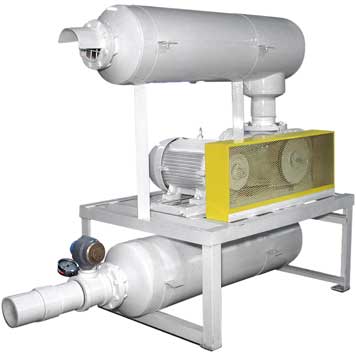
PRAB Pneumatic Conveyors are engineered to safely transfer dry metal chips or small, flowable solids over long distances with minimal floor space, making them a strong option for complex plant layouts or overhead routing.
 Pneumatic chip conveying systems move material through sealed pipelines using airflow created by a blower or vacuum generator. Depending on the material and distance, they operate in two main modes:
A typical PRAB system includes:
Because the system is fully enclosed, there’s no spillage, airborne mist, or chip exposure, supporting safer, cleaner operations.
Pneumatic conveying excels with small, dry chips or turnings, especially aluminum, brass, or magnesium. These materials are low-density and flow easily through pipelines.
Unlike mechanical conveyors that require floor space, pneumatic lines can run overhead or vertically, freeing valuable production area.
Pneumatic systems can move material hundreds of feet without multiple transfer points, making them ideal for large plants or multi-story layouts.
The sealed system prevents fluid leaks and metal dust from escaping, which is important for facilities under strict air-quality or housekeeping requirements.
While powerful for certain materials, pneumatic systems are not universal.
Wet chips from machining with coolant or oily turnings can clump and block the lines. For these, PRAB recommends mechanical systems such as:
High-temperature chips from foundries or rough castings can rapidly wear tubing; mechanical conveyors provide longer service life in these environments.
Pneumatic systems are optimized for ≤ ½-inch particles. Long stringy turnings may tangle and create blockages unless pre-processed through a Chip Shredder.
| Benefit | Description |
| Reduced Downtime | Automated chip removal keeps machines running longer between maintenance cycles. |
| Simplified Layout | Overhead routing reduces floor obstructions. |
| Cleaner Environment | Enclosed transport reduces mist, spills, and chip handling. |
| Lower Maintenance | Fewer moving parts than mechanical conveyors. |
| Improved Safety | No exposed belts or augers near operators. |
Maintenance teams also benefit from modular design and easy-access clean-out ports for inspection and service.
Many manufacturers combine pneumatic conveyors with PRAB’s chip processing equipment for a complete end-to-end solution:
| PRAB System | Function | Benefit |
| Metal Turnings Shredder | Reduces chip size | Prevents clogs in conveying lines |
| Wringer/Centrifuge System | Separates fluid from chips | Enables dry pneumatic transfer |
| Briquetter | Compresses chips for resale | Increases scrap value, reduces volume |
| Coolant Recycling Systems | Reclaims cutting fluids | Completes closed-loop sustainability cycle |
This integration enables manufacturers to automate chip collection, separation, and recycling, improving safety and reducing waste-handling costs.
A pneumatic conveyor’s ROI comes primarily from reduced labor, cleaner operations, and minimized coolant contamination.
Typical results include:
By automating material transfer, plants can reassign operators from waste management to production tasks, improving both output and safety.
 PRAB engineers help clients evaluate chip type, moisture level, volume, and layout to select the best conveyor solution. In many plants, a hybrid configuration, pneumatic for light, dry chips, and mechanical for heavier streams, delivers the best performance.
For technical consultation, visit PRAB Conveyors or request a custom materials test to determine suitability before purchase.
Key Takeaways
Explore PRAB’s complete line of conveyors to find the right solution for your plant layout and material type.
FAQ
Light, dry materials such as aluminum, brass, or magnesium chips convey efficiently. Wet or heavy ferrous chips should be used with mechanical systems.
Depending on system design, PRAB pneumatic conveyors can move chips hundreds of feet, even across multiple levels or rooms.
Periodic inspection of tubing and filters, along with air-flow calibration, ensures consistent performance and prevents blockages.


 (800) 968-7722
 (800) 493-3462