What is an industrial water recycling system?
An industrial water recycling system treats a manufacturing plant’s process water and wastewater, such as oily wash water, rinse water, and spent coolant, so it can be reused in production instead of being hauled away or sent down the drain. Whatever can’t be reused is treated to meet POTW discharge limits before release. PRAB builds these systems around ultrafiltration, reverse osmosis, EVALED® vacuum evaporation and automated pH adjustment, configured to the chemistry of your water. EVALED evaporators recover up to 99% of wastewater as clean distillate, which makes zero liquid discharge (ZLD) a practical goal.
Every gallon you treat and reuse is a gallon you don’t buy, haul or have to defend to your POTW. PRAB works with manufacturers who want to recycle and reuse their own industrial water: machining and metalworking plants, metal finishers and platers, aerospace and automotive suppliers, battery recyclers and chemical processors. Your dedicated PRAB solution team starts with your water, your permit and your goals, then designs the system that gets you there.
PRAB customers have reported:
Behind those numbers are day-to-day gains that matter just as much: fewer tanker pickups, more predictable compliance, less exposure to hazardous chemicals for your people, and a water story you can tell customers and corporate sustainability teams with confidence.
Most plants manage three different water streams. A PRAB system can address one or all of them.
| Water stream | What PRAB solves | Typical goal |
|---|---|---|
| Incoming water | pH imbalance, total dissolved solids (TDS), total suspended solids (TSS), hard water | Protect equipment and process quality |
| Process water | Contamination in rinse water, wash water, chemical baths, parts finishing water and cooling water | Reuse the same water again and again |
| Wastewater | Oils, solids, metals, and pH that exceed permit limits | Meet POTW discharge limits, cut haul-away, or reach ZLD |
| Technology | What it removes or does | Where it fits |
|---|---|---|
| Ultrafiltration (UF) | Suspended solids and emulsified oils from coolant, wash water and process fluids | The workhorse for oily wastewater and wash water reuse |
| Reverse osmosis (RO) | Dissolved salts and organics | Final polishing after UF for high-purity reuse |
| EVALED® vacuum evaporation | Concentrates wastewater, recovering up to 99% as distillate | Zero liquid discharge; plating, aerospace and battery recycling streams |
| Automated pH adjustment | Holds effluent in a 6.0 to 9.0 range with automated dosing and data logging | Compliant release to the POTW; metal finishing and chemical plants |
| Oil-water separators | Free oil, removed early in the treatment train | Pretreatment that protects downstream equipment |
| UV disinfection and ozone oxidation | Bacteria and organics, without added chemicals | Recycled process water and specific permit requirements |
| Coolant recycling and sludge dewatering | Recovers metalworking fluid and reduces solids volume | Closed-loop operations tied to machining |
There is no single right answer. The best path depends on your water, your permit, and what water and disposal cost you today.
Many plants combine paths: reuse most of the water, release a small, well-controlled stream, and evaporate the hardest-to-treat waste.
Hauling wastewater feels simple until you add up the invoices, the tanker schedule and the liability that follows the waste after it leaves your dock. On-site treatment turns a recurring cost into an asset you control. PRAB’s free Fluid Testing and the solution team’s review give you the numbers to compare both options side by side before you spend anything. For a deeper look at how waste stream processing fits into overall cost control, read PRAB’s guide to reducing material and labor costs.
Aerospace, automotive, metal finishing and plating, battery recycling, electronics and display manufacturing, chemical and pharmaceutical processing, and general manufacturing.
An industrial water recycling system treats a manufacturing plant’s own process water and wastewater so it can be reused in production. Water that can’t be reused is treated to meet POTW discharge limits before release. Common technologies include ultrafiltration, reverse osmosis, vacuum evaporation, and automated pH adjustment.
The terms are often used interchangeably. Recycling usually refers to treating the water, and reuse refers to putting the treated water back to work in rinsing, washing, chemical baths or cooling.
Yes. With the right treatment, wastewater can be reused for rinse water, wash water, chemical baths, parts finishing, and cooling water. PRAB customers report reusing 81% or more of their wastewater.
Ultrafiltration membranes remove suspended solids and emulsified oils from coolant, wash water, and other process fluids. It is often the core technology in systems that recycle oily wastewater for reuse.
Zero liquid discharge means a plant releases no wastewater to the sewer or the environment. Vacuum evaporators such as EVALED recover up to 99% of the wastewater as clean distillate for reuse, leaving a small concentrate for disposal.
Federal pretreatment rules prohibit releasing wastewater with a pH below 5.0 to a POTW unless the treatment works is designed for it (40 CFR 403.5(b)(2)). Many POTWs also set local limits, so check your permit. PRAB automated pH adjustment systems maintain effluent within the 6.0 to 9.0 range and log data for your records.
Yes. PRAB specializes in brownfield integration around existing equipment, piping, and floor space.
Payback depends on your water and disposal costs, flow rate, and chemistry. PRAB reports a typical return on investment in 12 to 18 months.
No. Coolant recycling, such as a PRAB Guardian system, filters and restores metalworking fluid so it can return to your machines. Industrial water recycling treats wash water, rinse water and wastewater. Many machining plants use both as part of one closed-loop plan.
Start with PRAB’s free Fluid Testing. Your dedicated PRAB solution team uses the results, your flow rate, and your permit requirements to recommend the right combination of technologies.
Find out what your wastewater can become. Request a FREE Fluid Test or talk with your PRAB solution team.
PRAB. Built to Last. Proven to Perform.

Customers are reusing 81%, or more, of their wastewater.
Eliminate the need for hazardous chemicals and air contaminants.

Meet zero liquid discharge goals and comply with state and local regulations.

Proven to reduce manufacturing disposal costs up to 15x.
Protect your equipment and final product from contamination:
Reduce water costs and increase process performance by reusing water:
Meet environmental and discharge requirements, while maximizing profitability:
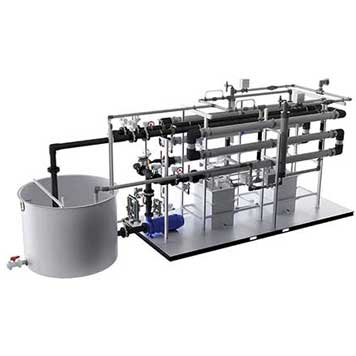
Separates suspended solids, emulsified oils and fine particulates; extends wash-water life, cuts chemical use and enables reuse. Learn More >
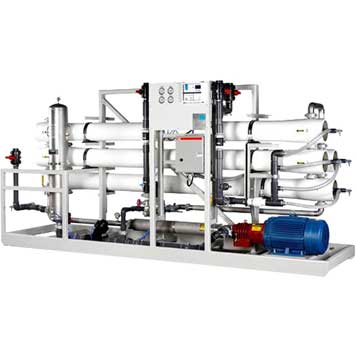
Ideal for industrial, metalworking and surface-treatment applications as a final stage after UF or chemical polishing. Learn More >
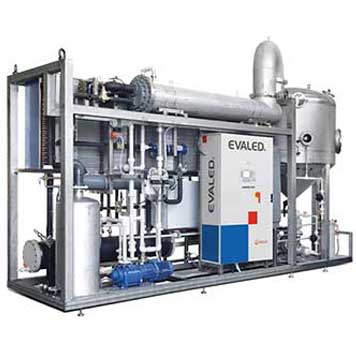
Concentrate high-strength wastewater, recover usable distillate and achieve ZLD for industries like plating, aerospace and battery recycling. Learn More >
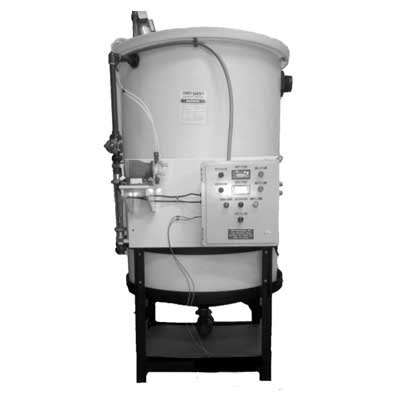
Automated monitoring and dosing ensure effluent neutrality and compliance; designed for metal-finishing, manufacturing, recycling and chemical plants. Learn More >
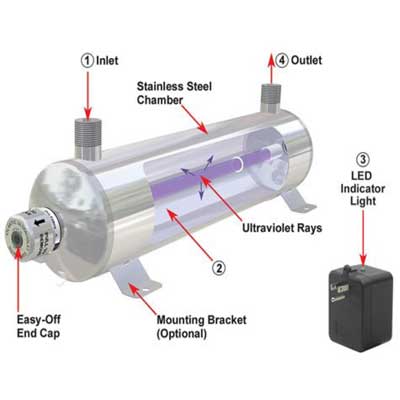
Chemical-free microbial and organic reduction; suited for high-purity reuse applications and closed-loop systems. Learn More >
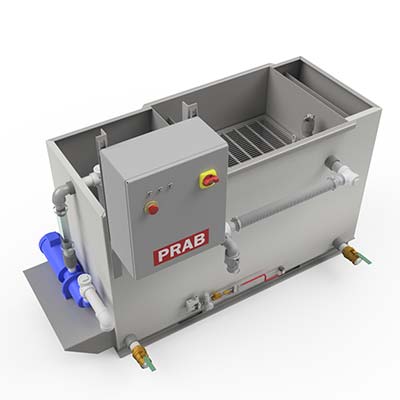
Remove free and emulsified oils early in process-water treatment to protect downstream equipment and optimize the treatment chain. Learn More >
Water Management solutions for Industrial wastewater treatment and process water treatment use a combination of physical, chemical, and biological processes to remove contaminants, meet environmental regulations, and enable reuse.
Key technologies include ultrafiltration (UF) for suspended solids and oils, reverse osmosis (RO) for dissolved salts, vacuum evaporation for Zero Liquid Discharge (ZLD), pH adjustment systems for regulatory compliance, oil-water separators, UV disinfection, and ozone oxidation for targeted contaminant removal.
PRAB designs fully integrated systems combining UF, RO, vacuum evaporators, automated pH control, and advanced oxidation in turnkey configurations tested under stringent factory conditions. These systems have achieved up to 90% wastewater volume reduction and significantly lowered chemical consumption in high-demand industries.
Custom system design begins with an analysis of industrial wastewater composition, flow rate, and site goals. Aerospace may need heavy-metal removal, plating may require cyanide destruction, and battery recycling may need acid and fluoride treatment.
PRAB’s engineers combine UF, RO, evaporation, pH control, and chemical treatment for industry-specific solutions, often delivered in modular, skid-mounted configurations for quick installation.
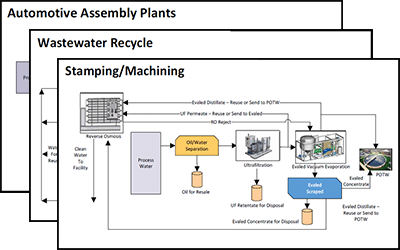
Industry Examples & Flow Diagrams of Industrial Wastewater Treatment Systems
Oil-water separators remove free and some emulsified oils from process water, protecting downstream filtration equipment and improving discharge quality.
PRAB offers oil-water separation as part of integrated treatment packages, improving UF membrane life and system efficiency.
PRAB Oil-Water Separation Solutions

 (800) 968-7722
 (800) 493-3462