Most manufacturing plants do not suffer from one isolated inefficiency. Instead, costs accumulate across interconnected systems: metal scrap handling, chip processing, coolant management, and wastewater treatment. When these areas are addressed independently, performance gains remain local—often failing to translate into meaningful, enterprise-level financial improvement. That’s where it’s important to think of the flow -from Machine Sump to Bottom Line.
 Plant managers, manufacturing engineers, CFOs, and business owners increasingly evaluate capital investments based on total operational impact rather than individual equipment performance. Common questions include:
This is where integration of optimized equipment into your existing metalworking systems consistently outperforms standalone equipment.
At PRAB, Inc., system-level integration is not a marketing concept. It is how solutions are engineered, deployed, and supported across real manufacturing environments.
Metal chips, cutting fluids, and wastewater are not independent byproducts. They are physically, operationally, and financially linked:
Addressing one issue in isolation often shifts cost elsewhere. When PRAB engineers solutions that integrate into your systems, we close these loops—converting waste streams into recoverable assets while stabilizing operations across the plant.
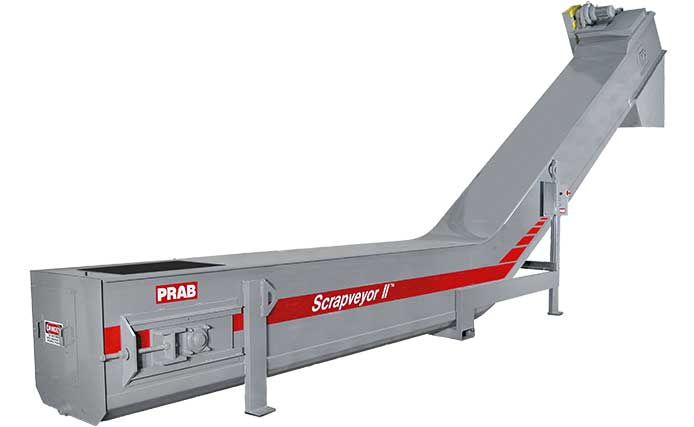
When scrap handling, chip processing, and briquetting operate as a single system, manufacturers typically realize:
Key insight: chip conveyors, wringers, and briquetters deliver their strongest ROI when engineered together—not when purchased as isolated upgrades.
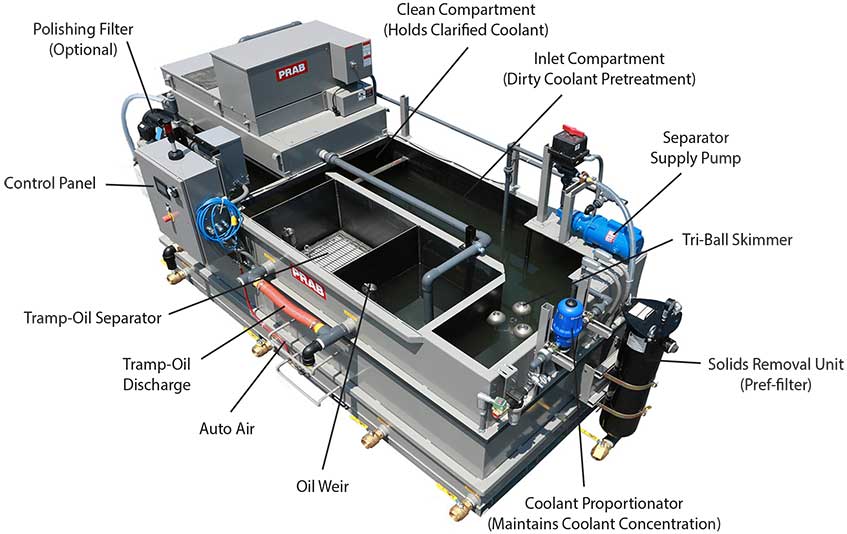
Coolant is often one of the largest recurring operating expenses in metalworking operations. Treating coolant management as routine maintenance results in excessive purchases, inconsistent fluid quality, and avoidable downtime.
When coolant recycling is integrated with chip processing, recovered fluid volumes increase substantially—accelerating both cost savings and payback.
Wastewater treatment is often treated as a regulatory necessity. Integrated systems reposition it as a strategic control point for cost, risk, and sustainability.
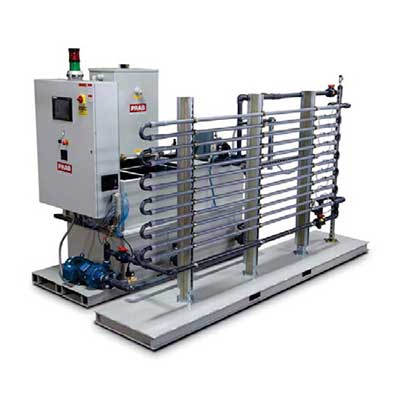 The Integrated Water Treatment Flow
When wastewater treatment is engineered into the overall chip-and-fluid system, total waste generation drops—reducing treatment system size, energy use, and lifecycle cost.
For CFOs and business owners, the advantage of integrated systems is clarity. Instead of evaluating multiple capital requests with fragmented payback models, leadership can assess one unified investment tied directly to:
PRAB case studies and white papers consistently demonstrate that integrated implementations deliver faster payback and more durable savings than piecemeal solutions.
Beyond financial metrics, integrated systems deliver something harder to quantify but equally valuable: operational stability.
PRAB systems are engineered for decades of service—not short replacement cycles. When conveyors, chip processing, coolant recycling, and water treatment are designed to work together from the start, manufacturers benefit from:
Integrated systems are not about buying more equipment. They are about removing friction across the entire manufacturing ecosystem—from machine sump to recycler truck, from dirty coolant to reuse, from wastewater liability to operational control.
For plant managers, engineers, CFOs, and business owners, the conclusion is clear:
About the Author
Paul Montgomery is the Marketing Manager at PRAB, Inc., a global manufacturer of metal scrap handling, coolant recycling, and industrial wastewater treatment systems. With more than 25 years of experience across manufacturing, SaaS, custom development, healthcare, and education, he specializes in data-driven marketing strategies that connect plant-floor performance with executive-level business outcomes. His work focuses on total cost-of-ownership messaging, automation, and closed-loop manufacturing systems that help companies reduce waste, conserve resources, and improve profitability.


 (800) 968-7722
 (800) 493-3462