



Drag chain conveyors that move abrasive metal chips, fines, and swarf in a sealed steel trough, shift after shift.
Health & Safety: Fewer forklift trips and less hand contact with sharp scrap.
Low Maintenance: Slow chain speed and few moving parts mean less wear. Scrap drops clean into the box with no carryover.
Heavy-Duty: Abrasion-resistant flight bars with PRAB’s exclusive bolt-free connection.
Value: Scrap moves on its own, so operators stay on production.
A drag conveyor, also called a drag chain conveyor, chain drag conveyor, or drag flight conveyor, uses steel flights fixed to a moving chain. The flights scrape material along the floor of an enclosed trough. In metalworking, a drag chain conveyor moves abrasive scrap such as cast iron chips, heavy fines, and swarf that would wear out a belt. It can run flat, climb an incline, or sit in a pit below the floor.
A PRAB drag chain conveyor is built to handle the scrap that wears out other conveyors. Cast iron turnings, heavy fines, and dry sludge are hard on equipment. Our drag conveyors pull them along a hardened steel trough with welded steel flights and forged steel chain.
The trough is sealed and liquid-tight, so dust and coolant stay inside. The chain runs slowly and there are few moving parts, which keeps maintenance low.
Machining, grinding, and foundry operations. Drag conveyors also handle bushy turnings, stamping scrap, and die-cast trim.
Cast iron chips and grinding fines act like sandpaper on belts and hinges. As a chip conveyor on machining centers and transfer lines, a drag conveyor avoids that problem. There is no belt to wear through. The flights push the scrap along a steel trough that is built to take the abrasion.
A drag conveyor can run in a pit below the floor or submerged in coolant. The flights pull settled chips and fines out of the fluid and lift them into a hopper. Optional coolant pumps send the fluid on to fluid filtration and coolant recycling.
PRAB is a drag chain conveyor manufacturer with plants on two continents. We build and service drag conveyors in Kalamazoo, Michigan, for North American plants. Our team in Opole, Poland, builds and services them for customers in Europe and beyond.
The right metal scrap conveyor depends on your scrap. Here is where a drag conveyor fits and when another type works better.
| Conveyor type | Best for |
|---|---|
| Drag chain conveyor | Highly abrasive chips and fines like cast iron. Sealed trough controls dust and coolant. |
| Steel belt conveyor | Mixed, sharp, heavy, or bushy scrap, wet or dry. Common under stamping presses. |
| Magnetic conveyor | Ferrous chips and fines, moved without carryover. Will not hold aluminum or other non-ferrous scrap. |
| Oscillating conveyor | Gentle horizontal transfer of chips and scrap, often machine-side or in a pit. |
| Pivot belt conveyor | Thin, oily, or sticky stamping scrap and slugs that cling to standard belts. |
Not sure which fits? Try the Find Your Conveyor tool, or send us a sample for free materials testing.

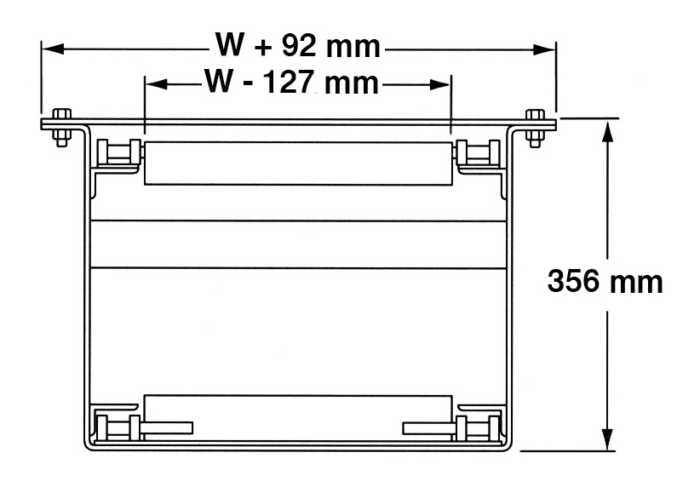
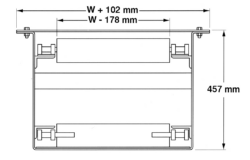
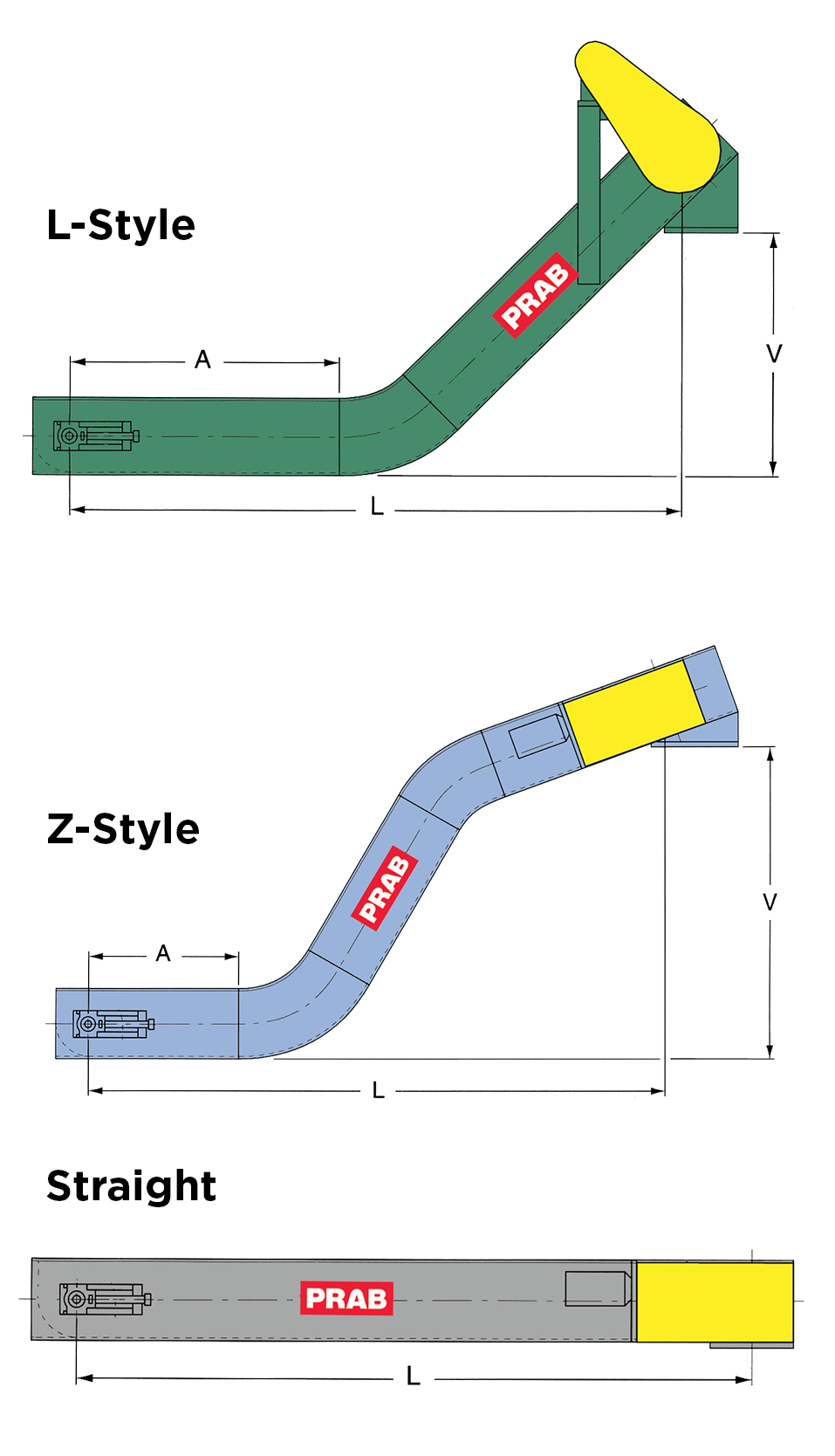
PRAB offers two drag conveyor models, Series #348 and Series #458. Both come in Z-style, L-style, and straight layouts. Both handle scrap across a wide range of weights and bulk densities.
Product Brochures
Product Brochure: Drag Conveyor
White Paper
White Paper: Avoiding Accidents, Injuries & Illnesses In Metalworking Operations
Other Downloadable Content
Conveyor Solutions
PRAB Builds Equipment for the Toughest Jobs in Manufacturing and Metalworking
“Keeping up with high Q rates” sounds like the title of a reality TV show. It’s definitely an important aspect of any industrial manufacturing operation that puts a priority on optimizing output. If the goal is to machine as many parts as possible in the shortest amount of time to maximize profitability, a high material removal rate (Q) is critical […]
The forklift truck is standard equipment for many industrial manufacturing operations that need to move enormous amounts (read: tons) of material from point A to point B, day in and day out. Most of these operations probably feel like they can’t live without forklifts. However, the convenience and expediency they provide, in addition to sparing workers the task of lifting […]
There isn’t an employer in existence that shouldn’t consider slips and falls to be a significant safety concern in its facilities. In an article about overlooked hazards and risk zones in the workplace, Facility Executive magazine cites some sobering numbers: Same-level slip and fall accidents are the leading cause of workplace injuries and totaled almost 200,000 in 2015, according to […]
A metal scrap conveyor is a system used in manufacturing to transport metal chips, turnings, swarf, and other waste for recycling or disposal. Common types include steel belt, oscillating, drag chain, magnetic, pneumatic, and specialty conveyors—each chosen based on scrap size, abrasiveness, coolant content, or temperature. These systems improve efficiency, safety, and the value of metal scrap while preventing downtime.
PRAB metal scrap conveyors are engineered for 30+ years of continuous operation—with documented installations exceeding 40 years. Systems handle up to 2,000 lb/hr of scrap and integrate seamlessly with metal chip processing and coolant recycling systems. Known for their low maintenance and durability, PRAB metal handling systems are trusted by automotive, aerospace, die-casting, CNC, and heavy manufacturing plants worldwide.
Resources:

 (800) 968-7722
 (800) 493-3462